
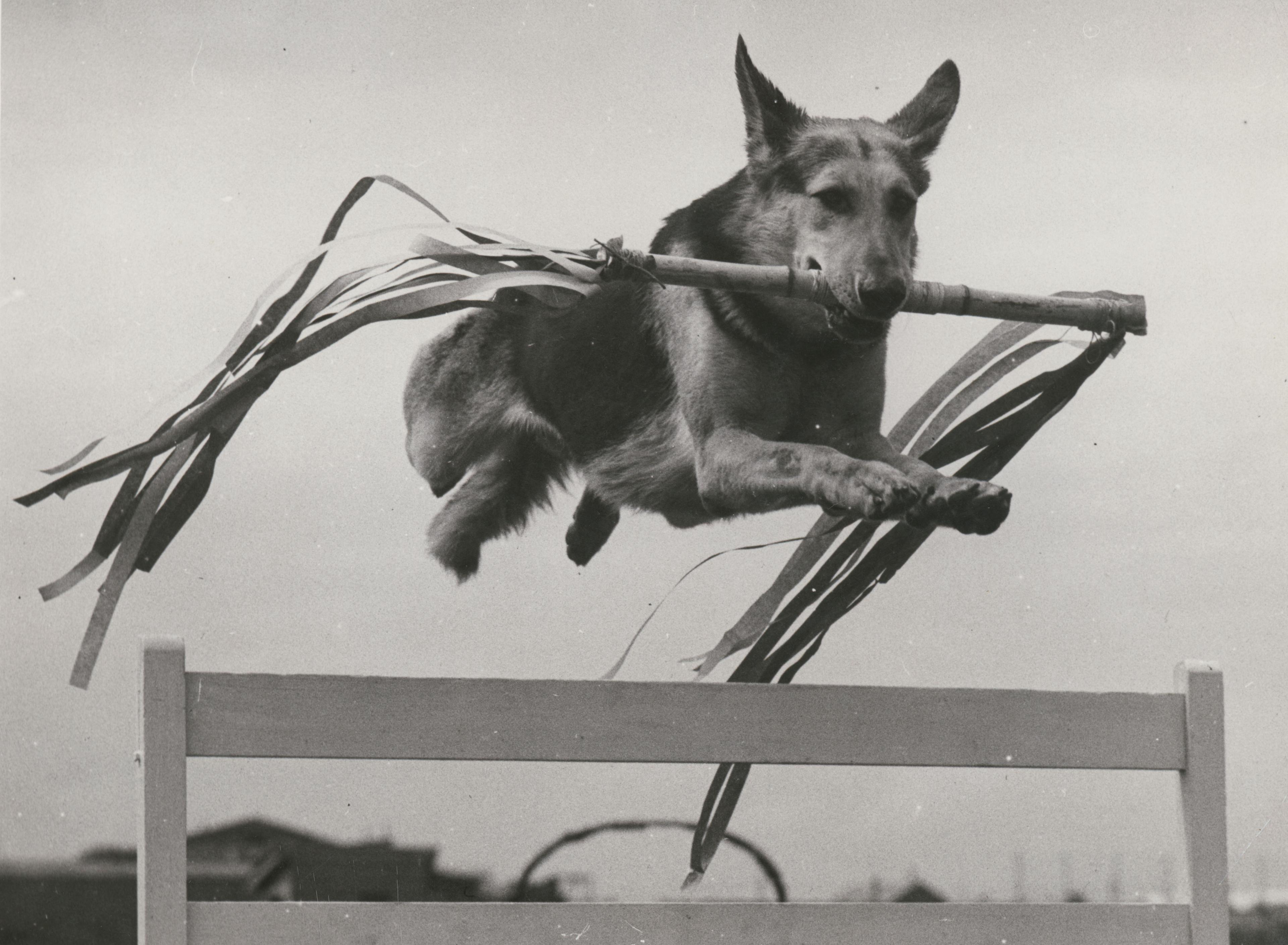
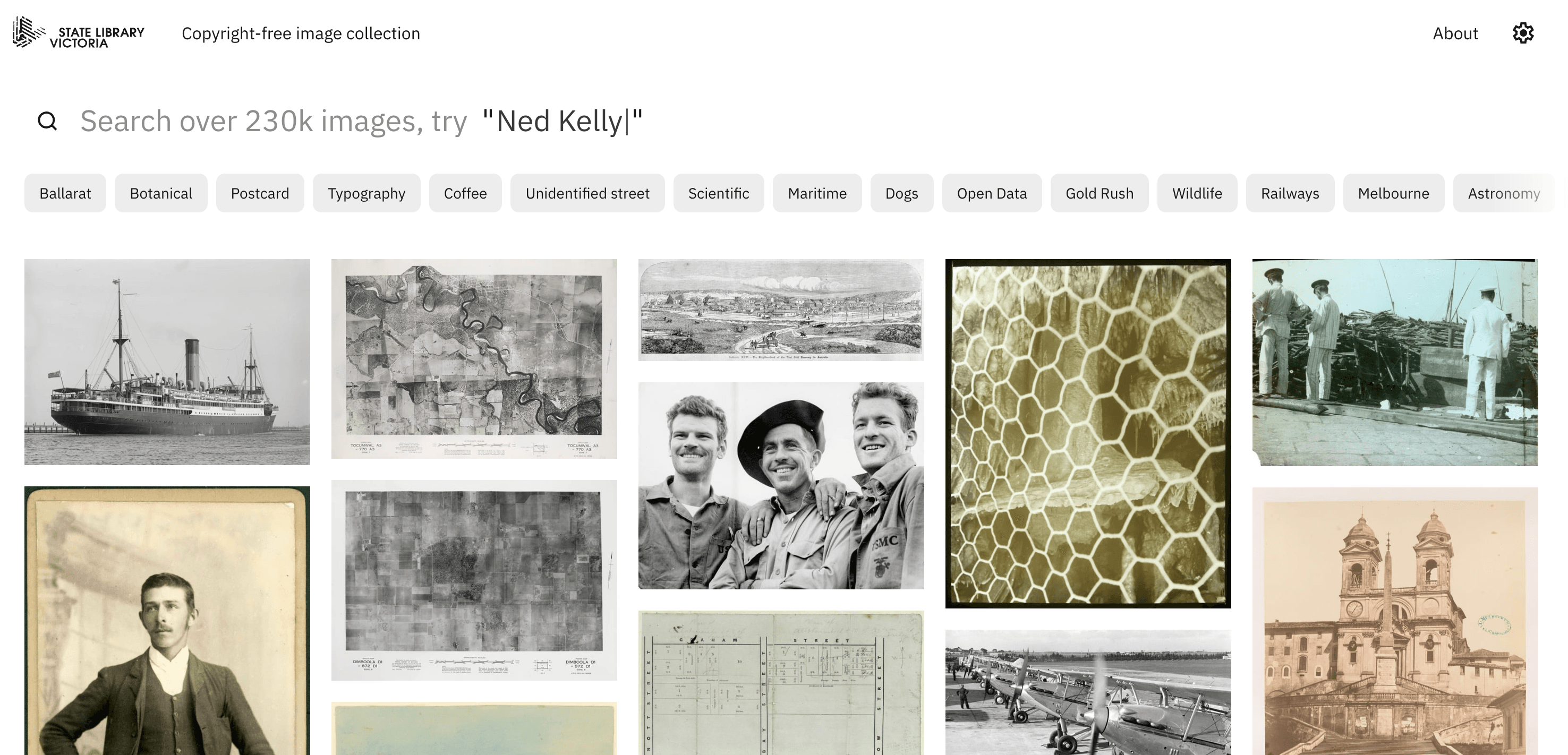
More than 230,000 digitised images from State Library Victoria’s collection can now be searched, viewed and downloaded more seamlessly through a newly rebuilt copyright-free image interface.
Developed by the Library’s Creative Studio , the platform responds to the challenge of making a vast historical collection feel quick and inviting to explore. In addition to refreshing the page design, the team rebuilt the experience from the ground up, replacing ageing infrastructure and simplifying the path between a search and the image it returns.
Removing friction
The Library’s copyright-free collection spans two centuries of Victoria’s history. It includes photographs, maps, posters, postcards, architectural drawings, and works on paper, among many other formats. Access to this rich collection sat behind a complicated and outdated technical environment. The previous search service drew information from multiple systems and relied on older server technology, and as layers of technology accumulated over time, the experience became slower and harder to maintain.
For users, loading more images than the 12 images shown in the default view could take more than 10 seconds to return results. This creates friction.
The rebuilt search can return results in around 200 milliseconds, according to the project team. That makes it 60 times faster than the previous interface and changes how the collection can be experienced. Users can move rapidly between searches, test different terms and follow unexpected paths through the material.
Building for speed and resilience
The new platform uses OpenSearch, an open-source search and analytics system forked from Elasticsearch. Search results are weighted towards image titles, helping the system identify material that is likely to be most relevant to a user’s query.
The underlying image files remain in Rosetta, the Library’s digital preservation system. Copies are delivered through FotoWare, supported by a dedicated cloud-based delivery layer created for the project.
This architecture separates preservation, image management, search and public delivery. Rather than continuing to place new technology over old systems, the project team has made broader structural changes intended to improve performance and make the service easier to develop over time.
Making the collection easier to explore
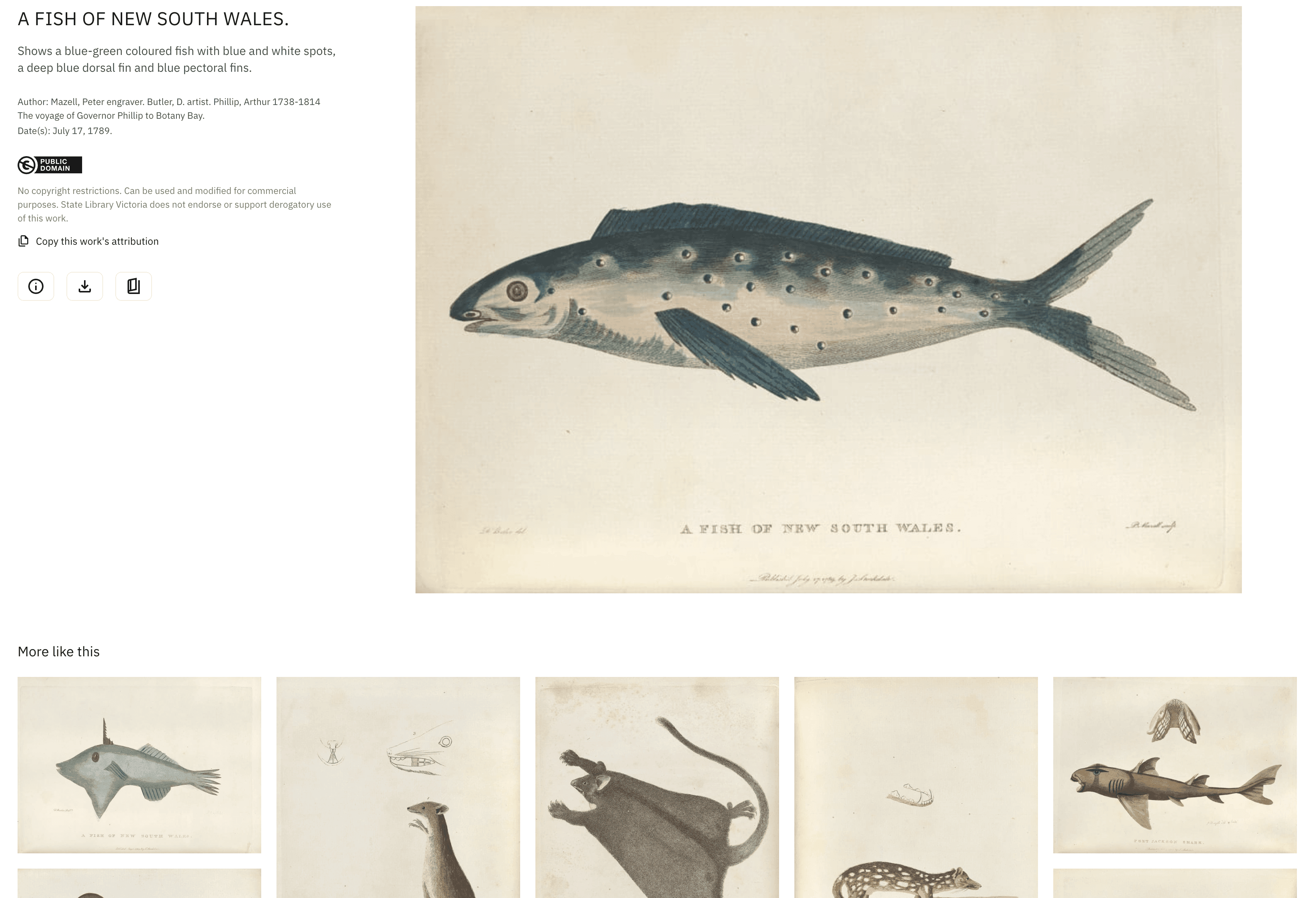
Speed is only part of the change. Led by developer Nick Paustian and designer Lachlan Siu , the redesign also introduces a cleaner interface, improved accessibility and new paths for discovering related material via catalogue metadata.
That ‘more like this’ feature encourages a more exploratory form of searching. A user might begin with a known subject, place or photographer, then follow connections into unfamiliar parts of the collection. The interface therefore supports two different kinds of visitor: searchers and browsers.
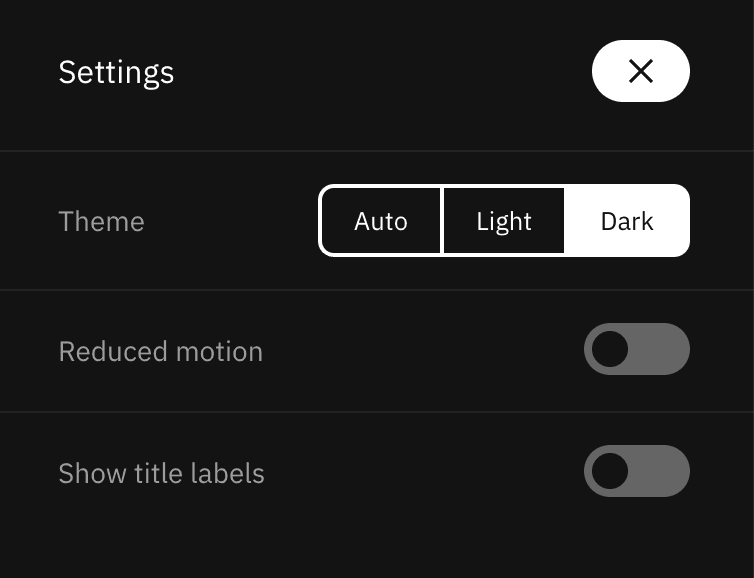
Accessibility was also informed by lessons from Mouthful of Dust, an earlier digital project for which Nick developed accessibility controls in consultation with Centre for Accessibility Australia (CFA). For the rebuilt image search, he applied the principles produced through that collaboration, carrying established accessibility practices from one Library project into the next.
The redesign has also provided a practical test case for broader work on the Library’s main website, allowing the team to examine how contemporary design and infrastructure can support faster, more accessible collection discovery.
A resource made for reuse
The collection has applications across research, education, publishing, design and creative practice. For instance, marketing teams might use a historical photograph in a newsletter item or topical social media post, or an artist might transform archival images into a collage. An historian or researcher might use maps or architectural drawings to trace changes in Victoria’s built environment.
Because the images are in the public domain, they can be reused for personal and commercial purposes without copyright restrictions.
Accessing Victoria’s memory
State Library Victoria has actively digitised its collections since 1993. More than 970,000 items have been digitised, including photographs, maps, newspapers, historic pamphlets, glass-plate negatives and rare works on paper. By treating speed and smoothness as part of discoverability, Creative Studio have created a platform that makes the free-use component of our large collection feel more immediate. Less time can be spent staring at a loading screen and more time can be spent going down rabbit holes, following the next intriguing image.
Resources
Title | Type | Author(s) | Tags |
|---|---|---|---|
| tutorial |
| ||
| dataset |
| ||
| codebase |
|